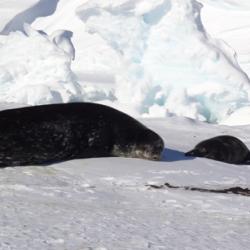
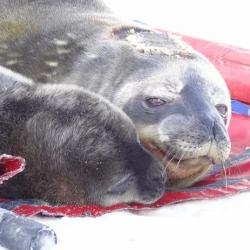
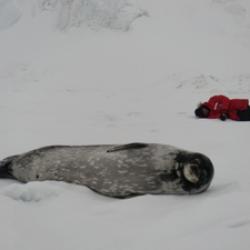
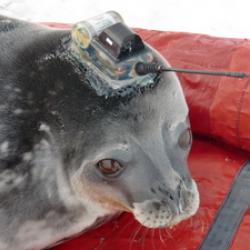
Reflections from my PolarTREC Journey
Where it all began
While the actual 'Weddell Seal in the Ross Sea expedition' went from January 6 through February 20, my expedition started much earlier - a year earlier in fact - when I was selected for the PolarTREC program in January of 2011. One month later I attended PolarTREC Orientation and Share Fair - where myself and 11 other PolarTREC teachers learned the in's and out's of what it means to be a PolarTREC teacher. We received many beneficial 'tips' from former alumni and we even got 'cold weather training' as our orientation was in Fairbanks, Alaska in February. Burrr! If I remember correctly, the temperature dropped to -10 degrees F.
The temperature in Fairbanks, AK reached -10 during orientation. Yikes!
A debt of gratitude is owed...
Life at McMurdo - Part two
Since we've tagged the last seal - 21 in all - I've had a 'wee bit of time' (that's what they say in New Zealand) to explore McMurdo.
Join me on my tour.
Housing
My first day on the 'Ice', I met Autumn who works in 'housing'. Let's find out what she does at McMurdo.
Autumn hard at work in the housing department.
Throughout the summer season people are constantly coming and going through the station - and they all need a place to stay. Autumn helps make these arrangements. She - along with the entire housing team - have several important tasks.
They make living arrangements for everyone on station
Make key packets
Meet all 'new arrivals' and give them the McMurdo orientation (That's the one I missed twice)
Attend to any housing problems that may arise...
Life at McMurdo Station
Wow! It's hard to believe my time in McMurdo is coming to an end. From the moment I stepped off the plane it's been like a foot race - hurrying here, hurrying there, and trying to get everything done! In fact, it's been so busy, I've missed the 'Welcome to McMurdo' orientation tour -- not once, but twice!
So, what have I been doing - you ask? Great question! Join me as I share a bit of my McMurdo experience!
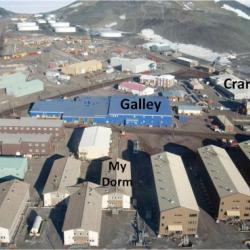
During my first month here, I've spent the majority of my time (on station) in three places:
My Dorm
The Galley
Crary Lab
A little taste of McMurdo Station. Home sweet home!
Here's a little taste of each:
Dorm Life
It's been quite a while since I've spent any time in a dorm (college days to be exact) but my transition back to dorm living went...
This journal brought to you by...
Donna Hawkins and her 1st graders at Jackson Elementary
Melody Tannehill and her Kindergartners at Hutchison
St. Ann 5th grade Sparks students
Thank you - Jackson Elementary, Hutchison and St. Ann Schools!
A Closer Look at … Weddell Seal Blubber
What’s all the blabber about blubber?
I’m sure you’ve noticed by now how HUGE Weddell seals are, and one of the reasons for their enormous size is that 30-40% of their bodies are fat! Actually, it’s a special kind of fat, or lipid, called blubber. Blubber has a very important purpose for Weddell seal. Can you guess what it is?
Insulation
Yes - to keep them warm! They live in such a cold environment that they actually need extra fat to insulate their bodies. Blubber traps heat inside their bodies,...
Insulation - Video Journal
This journal is brought to you by:
• The students at Jackson Elementary
They wanted to know... What kind of insulation works best for marine mammals - fur or blubber? That's a great question. Let's investigate!
Enjoy the video and be sure to try out the activity!
And just for fun... here's a funny blooper... that should make you laugh!
The video was adapted from the 'Insulation Activity' written by Dr. Terrie Williams on the following website: http://bio.research.ucsc.edu/people/williams/teachers/intro.htm
Teachers!!!...
This journal brought to you by:
The Pink Palace Homeschool class - 1st and 2nd grade!
Thank you... Pink Palace Homeschool 1st and 2nd graders!
A Closer Look at … Weddell Seal Milk
Milk and Mammals
Seals are marine mammals, and one of the characteristics of a being a mammal is to nurse the young. So, my question is: If seals - like humans - nurse their young, is their milk the same?
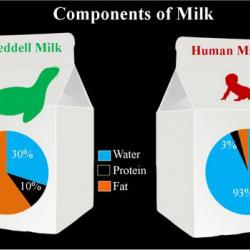
Milk carton. Image Credit: Mark A. Hicks, Clip art licensed from the Clip Art Gallery on DiscoverySchool.com
The answer is NO! There are some big differences. One difference is the percentage of fat in the milk; the other is the amount of milk human newborns and seal pups drink.
Fat
Let’s start off by talking about the milk we drink now – not the kind our mothers nursed us on when we were babies...
This journal brought to you by:
Toya Jackson and her 4th grade students
St. Ann 'Sparks' 5th graders
Bailey Station 4th grade APEX
Thank you - Jackson Elementary, St. Ann and Bailey Station.
An Icy Interlude
Antarctica is a place that knows ice! But not all ice is the same. In fact there are many different types of ice, all with interesting facets.
Let's start large...
Glaciers
One word you hear a lot when referring to ice down here is glaciers. Glaciers are constantly moving, masses of ice. They are created when snow accumulates in layers and the pressure of all of these layers along with the influence of gravity causes the mass to move very slowly!
Check out this diagram to show you how glaciers are formed. It takes a long time, but all of those layers of snow build up...
This journal is brought to you by:
Amy Bogdal and her 4th and 5th grade CLUE students at Shelby Oaks Elementary
Bailey Station 4th grade APEX students
Katabatic winds as seen on infrared satellite. Photo credit: Paul Gulli.
Weather part II - Katabatic winds
Yesterday we talked about weather conditions in Antarctica. Today we are going to get more specific - we're talkin' wind - Katabatic winds to be exact. Wind and weather is a daily concern, and there are groups of people whose job it is to monitor the weather. So I thought we'd talk to the experts today! Here's Mark to tell us all about Katabatic winds.
This journal is brought to you by:
Marsha Stinson and her 4th graders at Jackson Elementary
St. Ann 6th grade Sparks students
Bailey Station 4th grade APEX students
Thanks Jackson Elementary, Bailey Station and St. Ann School!
Weather
Now I must admit - we've been having spectacular weather since I've been in Antarctica! Don't get me wrong - it's cold - very cold some days, but I was expecting much worse. And to tell you the truth, so was the rest of the team. Either way - we're not complaining! But let's take a closer look at the weather conditions!
Weather Conditions
There are three classes of weather - and travel restrictions - which apply to all personnel working in and around McMurdo Station. They are:
Condition 3
Condition 3 is the best Antarctic weather. It is...
This journal brought to you by...
Amy George and her 2nd grade CLUE students at Grahamwood Elementary
Brenda Silberman and her 4th grade APEX students at Bailey Station Elementary
St. Ann 3rd grade Sparks students
A Closer Look at… the Sounds of a Weddell seal
Can you hear me now???
Weddell seals are extraordinarily vocal – especially underwater! The booming calls, whistles, chirps, buzzes and trills of this seal sound more like Star Wars sound effects than an animal call!
Let’s listen to one for yourself!
Seal sound #1
Scientists have identified and even named 34 individual sounds or call types, and the names might even appear as outrageous as the sounds. Here are a few of the names:
chi-chi-chi
teeth clatter
mew
guttural glug
jaw claps
too-loo
what-chunk
Here are some...
This journal brought to you by...
Becky Shimp and her 6, 7 and 8 grade students
Mrs. Garay and her students at Redd School
Bailey Station 4th grade APEX
A Closer Look at … a Weddell Seal’s Muscle
An animal that spends most of its life swimming has got to have some pretty good muscles, right? Seals do, and they use their muscles very efficiently. Let’s find out how!
Oxygen - a key to doing work
In order to keep their muscles working when a seal is swimming – you need energy. And, a big part of that is getting oxygen to the muscles – so they can do work. But how do seals get oxygen to their muscles when they spend much of their time under water? You may remember from an earlier blog that hemoglobin is the ‘oxygen carrying’ protein in your blood that carries oxygen to the organs...
Happy Valentine's Day everyone!!!
Happy Valentine's Day from Antarctica!!!
This journal brought to you by:
Mrs. Garay and her students at Redd School
Becky Shimp and the 6, 7 and 8 grade students at St. Edwards School
Amy Bogdal and her 4th and 5th grade students at Shelby Oaks Elementary
Jane Gillespie and her 6th grade Sparks students
St. Philomena Junior High
A Closer Look at … a Weddell Seal’s Lungs
As you know, seals are mammals. Do you remember the defining characteristics of mammals?
1) Mammals are warm blooded
2) Young are born alive as opposed to developing inside an egg
3) They have fur or hair on their bodies
4) Every mammal is a vertebrate – they have a backbone
5) Mammals feed milk to their young.
And finally, mammals also have lungs which make them different - than say a fish. In order to breathe, seals have to have access to air, and...
This journal brought to you by...
Becky Shimp and her 6, 7 and 8 grade students
Mrs. Garay and her students at Redd School
St. Ann 6th grade Sparks students
A Closer Look at … a Weddell Seal’s Blood
Blood… is one thing that all mammals have in common. But is all blood the same? To find the answer, let’s look at how a Weddell Seal’s blood compares to mine! But first, let’s talk about the parts and purpose of blood.
The part and purpose of blood
There are four main parts of blood – red blood cells, white blood cells, platelets and plasma – each with its own purpose. Let’s take a closer look!
The parts blood.
Plasma – is the liquid part of our blood. About half of our blood is plasma, which is a yellow liquid made of water, sugar, fat, protein, and salt. Its job is to transport...
PHOTO CHALLENGE - WEEK SIX!
It's hard to believe my PolarTREC adventure is nearing an end. Sadly, this is the last photo challenge. So, in honor of this amazing adventure, I've asked - our now famous - photographers to send me their 'FAVORITE PHOTOS'.
And, I have to tell you... we've saved the best for last! It's going to be difficult to select from these submissions!
Again...before we get to the new PIC'S - you can still vote for the first five challenges:
Week one - 'Flora Flicks'. This journal also tells you about the contest.
Week two - '30 Minute Flicks'
Week three - 'PUP PIC'S'
Week four - 'Historic Huts'
Week five - Seal faces
Results
Week one - 'FLORA FLICKS' - Photo number 103 has pulled into the lead.
Week two - '30 MINUTE FLICKS' - 203 is still in the lead.
Week...
This journal is brought to you by:
Jessica Hughes and her 3rd grade students at Jackson Elementary
Becky Shimp and her 6th, 7th and 8th grade students at St. Edwards School
Mrs. Toes and her 2nd and3rd grade CLUE students at Coleman Elementary
Bailey Station 4th grade Apex
Thanks Jackson Elementary, St. Edwards Catholic School, Bailey Station and Coleman Elementary!
A Closer Look at…Predators of the Weddell Seals Leopard Seals & Antarctic Killer Whales
Predators and prey exist all over the world, even in icy Antarctica. Animals must eat to stay alive. There are creatures that are hunters and creatures that are the meal. Since I’ve been studying the Weddell seal, I wondered who eats them for lunch? Here’s what I’ve found out. The Weddell seal has two predators, the Antarctic...
Killer whales
Killer whales just might have a Leopard seal or a Weddell seal for lunch. The killer whale is the only known, natural predator of the leopard seal and both are predators of the Weddell sea. These whales are aggressive hunters that will leap up out of the water and pull seals right off the ice. They will even eat other whales.
A killer whale 'spy-hops' to identify a Weddell seal resting on an ice floe off the western Antarctic Peninsula. The whale will notify other killer whales in the area so they can coordinate a wave to wash the seal off the floe(Science Daily). (Photo Credit: Robert Pitman/NOAA)
Orcas, (Antarctic killer whales) are also known as the wolves of the sea. They are found in all the oceans of the world. A little research showed me the killer whale is...
This journal is brought to you by:
Diane Rath and her 3rd grade students at Bartlett Elementary
Mrs. Hillhouse and her 4th grade CLUE students at Campus School
Thanks Bartlett Elementary and Campus School!
Mt. Erebus: Liquid Lava, Steamy Gas, Solid Ice
Always in the distance, there is a smoking reminder that Antarctica is a place of extremes! From ice and glaciers to lava and volcanoes – Antarctica is one intense place.
Alex in front of Mt. Erebus - several miles in front it it and it still looks big! Photo credit: Patrick Robinson.
McMurdo station, sits at the bottom of a volcano. That’s right, there is a volcano (in fact there are 35 volcanoes) in Antarctica! This particular volcano is named Mt. Erebus and is the southernmost active volcano and is the second highest volcano...
Frozen Water - Video Journal - Part 2
This video is a continuation of the 'Freezing Water' video we did on February 5
In this activity you can explore how the formation of ice on the surface of saltwater in Polar Regions affects the salinity of saltwater in a process referred to as 'brine rejection'. We also compare the densities of frozen sea ice and the unfrozen water.
Enjoy the video and be sure to try out the activity!
And again - just for fun... here are a few bloopers... that should make you laugh!
Teachers!!!
The video was adapted from an...
This journal is brought to you by:
Magda Fleming and her 2nd grade students at Jackson Elementary
Students at St. Philomena Junior High in Peoria, Illinois
Thank you Jackson Elementary and St. Philomena Junior High
A Closer Look at … a Weddell Seal’s Teeth & Jaw
Open wide! Let’s take a look inside the mouth of a Weddell Seal!
Big yawn!!! Photo Credit: Josh Landis, National Science Foundation.
No doubt, the first thing that ‘sticks out’ to you in this picture are the teeth! Let’s bite into Weddell seal teeth and divide them into two sections: front teeth and back teeth!
Front teeth - Canines and Incisors
Take a look at these incisors and canines - from the front. Photo Credit: Jennifer Burns.
You can surely tell these seals are carnivores (meat eaters) by looking at...
This journal is brought to you by:
Amy Bogdal and her 4th and 5th grade CLUE students at Shelby Oaks Elementary
Mrs. Gillespie and her 5th grade Sparks students at St. Ann Catholic School
Thank you Shelby Oaks Elementary and St. Ann Catholic School!
A Closer Look at … a Weddell Seal’s Fur & Molting
Look at how beautiful this seal’s fur is!
Weddell seal showing off her new coat of fur. Photo Credit: Jennifer Burns.
It’s a gorgeous shade of silvery gray with some lighter spots on the underside – giving her a mottled, or spotted, look. The fur is short – only about 1 inch long, straight and more dense than the hair on our heads. It covers his entire body and acts as a protective layer for the skin. The fur of adult Weddell seals consists entirely of short, shiny, guard hairs...
This journal is brought to you by:
Mrs. Gillespie and her 5th grade Sparks students at St. Ann Catholic School
A Closer Look at… a Weddell Seal’s Habitat
Southern Most Mammal
Weddell seals hold the record for living further south than any other mammal.
The Weddell seal wins the trophy for being the 'Southern Most Mammal.' Photo credit: Kurt Guttensohn.
They live in the Southern Ocean surrounding Antarctica.
This map shows the general habitat of the Weddell seal - as well as seasonal ice cover. Image credit: Jennifer Burns.
Weddell seals are marine mammals that have two different habitats: one on land – or ice – and one in water. Although seals are able to easily dive into the water or ‘haul-out’ on ice whenever they wish – Weddells typically spend most of their time in the...
This journal is brought to you by:
Ms. Toes and her K-3 CLUE students at Keystone Elementary
Mrs. Gillespie and her 3rd grade Sparks students at St. Ann Catholic School
Ms. Lane and her 2nd grade CLUE students at Grahamwood Elementary
Students at St. Philomena Junior High in Peoria, Illinois
Thanks Keystone Elementary, St. Ann Catholic School, Grahamwood Elementary and St. Philomena Junior High in Peoria, Illinois!!!
A Closer Look at … a Weddell Seal’s Diet
What does a Weddell seal eat? Let’s check out what’s on the menu!
What would you choose if you had to select from one of these tasty items on the menu?
The seal’s breath smells mighty fishy – and rightly so – because one of their favorite foods is ICE FISH. Photo credit: Kurt Guttensohn.
You try it!
Create your own Weddell...
This journal is brought to you by:
Tanjara Wiggins and her 2nd grade students at Jackson Elementary
This journal is brought to you by the 2nd grade students at Jackson Elementary.
A Closer Look at … a Weddell Seal’s Flippers
Flipper Basics
Weddell Seal showing off her flippers! Photo Credit: Daniel Costa.
Weddell seals have four flippers – two fore flippers and two hind flippers. The two fore flippers are located on either side of the seal’s body, similar to where a person’s arms might be located. The two hind flippers are located at the end of the seal, where you might expect to find legs.
Marine mammal flippers are wide, flat, fin-like structures. They are webbed, covered in fur, and have claws near the end. Now that you have some of the basics – let’s go a little deeper....
Weddell Seal 'Stats' and Answers to Other Interesting Questions
This journal is brought to you by:
St. Philomena Junior High
A Closer Look - Seal 'Stats' - brought to you by St Philomena Junior High.
Seal Stats
Data, data, data!! We are accumulating and analyzing lots of seal data. The team is taking measurements of mass, length and girth - among other things.
Let’s take a look at how these animals measure up!
Length
The scientists take two length measurements: curve length and standard length.
Curve length is a measurement of the curvature of the seals body from the tip if the nose to the tip of the tail (not including the flippers).
Curve length is linear measurement at these various points.
Measuring curve length at various points
Standard length is a measurement...