
Update
PolarConnect Event Archived
Check out Nell Herrmann's PolarConnect Event from 2 March from Palmer Station, Antarctica by visiting the PolarConnect Event Archives.
What Are They Doing?
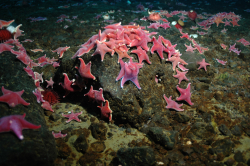
This project studied the effects of rising ocean acidification and temperatures on seafloor dwelling animals in the shallow waters of Antarctica. Carbon moves around the earth, between land, atmosphere, and water in the carbon cycle. The ocean absorbs Carbon Dioxide (CO2) from the Earth’s atmosphere. As increasing amounts of Carbon Dioxide are absorbed, the pH of the water is decreasing or becoming more acidic. This is called ocean acidification.
Several marine animals, such as mussels, snails, sea urchins, and more use the naturally occurring calcium (Ca) and carbonate (CO3) in seawater to construct their shells or skeletons. As seawater becomes more acidic, carbonate becomes less available, which makes it more difficult for these organisms to form their skeletal material. This negatively affects the health of the animal in many different ways.
In Antarctica, it is predicted that water temperatures will increase and the calcium carbonate needed by these organisms will decrease. Being sensitive to small changes in water temperatures and unable to form adequate shells and skeletons, many of these animals may have declined in health. Understanding how these small animals will react to changing ocean conditions is important, as several larger animals rely on them as a food source.
To collect their data, SCUBA divers dived to the seafloor and collected organisms. The research team ran several experiments on the animals to see how they would respond to changes in water acidification and temperature.
Where Are They?
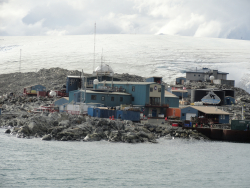 The research team lived and worked at Palmer Long-Term Ecological Research (LTER) study area, located on Anvers Island midway down the Antarctic Peninsula. Palmer Station is sponsored by the National Science Foundation and is one of three United States research stations located in Antarctica. During the summer research season, around 40 people live and work at the station, with that number going down to between 15 and 20 during the winter months. The team arrived at Palmer Station by ship from Punta Arenas, Chile.
Latest Journals
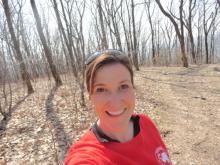
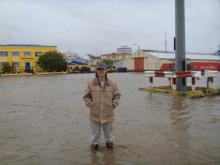

Nell Herrmann was formerly a Learning Enrichment and Gifted Support Specialist at State College Area High School in State College, Pennsylvania. She was the coach of several academic quiz teams at State High including both the National Ocean Sciences Bowl and the Department of Energy National Science Bowl teams. She is currently a middle school teacher at Blue Hill Consolidated School in Maine. Ms. Herrmann holds Bachelor's and Master's degrees in Ecology and Conservation Biology, along with a second Master's degree in Wildlife and Fisheries Science. She has been involved in conservation research at many organizations including the Rocky Mountain Biological Laboratory in Gothic, Colorado; the Hato Pinero Research Facility in Venezuela; Asociacion ANAI in Costa Rica; and the Kangerlussuaq International Science Station in Greenland. Ms. Herrmann has also worked as a boat naturalist for the Marine Environmental Research Institute (MERI) in Blue Hill, Maine. In her role there, she led trips on lobster boats for children and adults, educating the general public about ecological and conservation issues affecting both the Blue Hill Bay and the Gulf of Maine. Ms. Herrmann loves sharing her appreciation of nature with others and is thrilled about her opportunity to be a PolarTREC teacher.

Charles Amsler is a professor of Marine Ecophysiology and Chemical Ecology at the University of Alabama at Birmingham. The research that he conducts with his students is centered on several areas, but most involve chemical interactions between organisms or ways in which organisms perceive, respond to, or otherwise interact with their chemical environment. Dr. Amsler is very involved with educational outreach by regularly making presentations on Antarctica to K-12 classrooms and other groups (local science museums, etc.).