
Update
Archived PolarConnect Event!
Monday 9 April 2012: Amber Lancaster and the LARISSA Project Team
This event is available in the PolarConnect Event Archives
What Are They Doing?
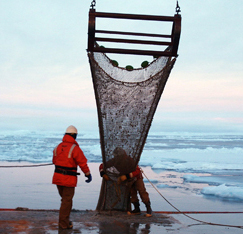
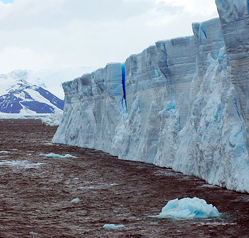
The overarching goal of the LARISSA (LARsen Ice Shelf System, Antarctica) project was to describe and understand the basic physical, geological, and biological processes active in the Larsen embayment that contributed to the present phase of massive, rapid environmental change. Dr. Vernet's research group worked to determine abundance, diversity, and production of marine phytoplankton in the Larsen B region. The team used shipboard samplers and moored sediment traps to sample from the water column up to depths of approximately 600 m. They did this to determine how much production is supported in the region, its distribution in space and time, and how the organic matter transfers into higher trophic levels and reaches the sediments. Time onboard the ship was spent selecting sampling locations, collecting water, filtering samples for analysis, and analyzing samples on board. They also collected water to isolate diatom species and brought them back to the lab for further experimentation. Results from this research allowed scientists to predict the likely consequences on marine ecosystems of ice-shelf collapse in other regions of Antarctica vulnerable to climate change.
Where Are They?
Latest Journals

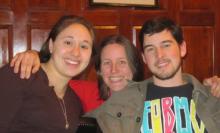

Because she excelled in her math and science courses, everyone pushed Amber Lancaster towards pursuing a degree in Electrical Engineering at the University of Southern California. Although she really enjoyed making robots, she decided to spend the next few years teaching English as a Peace Corps Volunteer in Morocco. Upon her return to the United States, she knew she wanted to continue teaching, but she switched to teaching science, her true passion. She received her Master’s in Education from the University of California– Berkeley in 2009 and has been teaching high school Biology at the June Jordan School for Equity in San Francisco, California ever since.

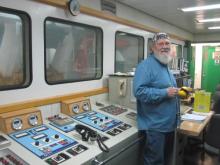
Dr. Maria Vernet is a Senior Research Biologist at Scripps Institution of Oceanography, one of the foremost oceanographic institutions in the world. Oceanography is an international arena and as such, Dr. Vernet has conducted research in international settings since 1987 when she first traveled to the Arctic and in 1988 to Antarctica. She participated in one of the first research teams to study the effect of ultraviolet radiation on marine phytoplankton after the discovery of the Antarctic ozone hole in 1985. Since then she has participated in a variety of multi- and interdisciplinary research projects, both national and international. Her field expeditions have taken her into the Atlantic, Pacific, Arctic and Southern Oceans with a variety of internationally assembled research teams. She presently participates in two Antarctic research projects studying the effects of global change in Antarctica, one on free-floating icebergs that have increased in abundance in the last decade and a second on the ecosystems of the Larsen B Ice Shelf on which she will host Amber Lancaster as a PolarTREC teacher. You can read more about Dr. Vernet and her research here [http://polarphytoplankton.ucsd.edu] and about the LARISSA project here [http://www.hamilton.edu/expeditions/Larissa]